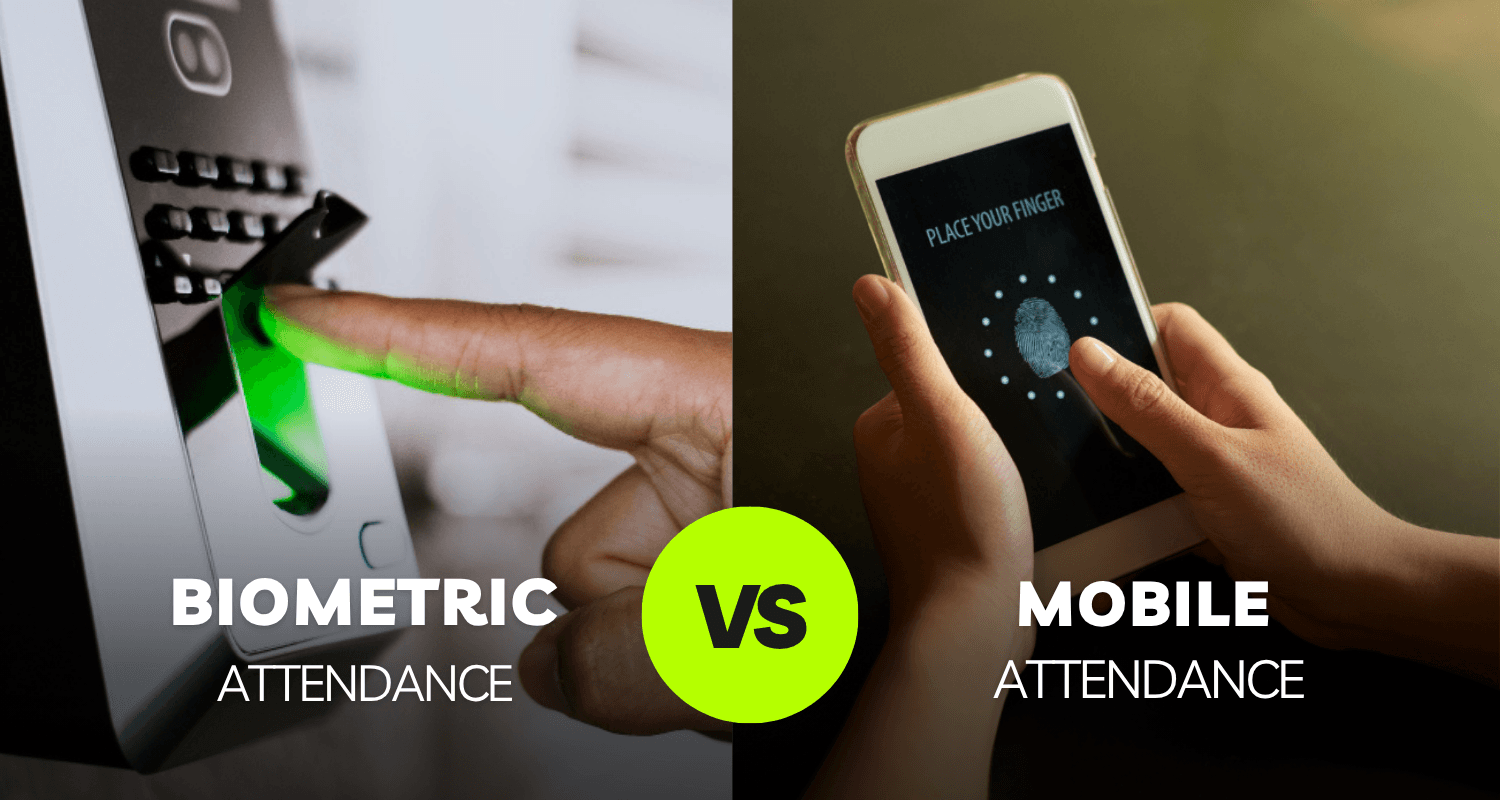
Biometric vs. Mobile Attendance in UAE: Which Employee Attendance System Is Right for Your Business?
Managing employee attendance sounds simple until a business has multiple locations, different shifts, field employees, overtime, and a growing workforce. For many UAE companies, attendance is still managed through spreadsheets, manual timesheets, punch cards, or separate biometric devices that are not connected to payroll.
This is where modern attendance management systems make a difference.
For businesses looking for a centralized time and attendance software in the UAE, these technologies can make it easier to record, monitor and manage employee working hours. Both can provide accurate employee time records, but they work differently and suit different types of businesses.
So, which one should a UAE business choose?
The answer depends on where your employees work, how many locations you operate, the type of workforce you have, and how closely attendance needs to be connected with HR and payroll.
What Is Biometric Attendance?
A biometric attendance system records an employee’s attendance by verifying a unique physical characteristic. Depending on the device, this could be a fingerprint, facial recognition, or another biometric identifier.
An employee arrives at the workplace, verifies their identity at the attendance device, and the system records the check-in time. The same process is followed when the employee leaves.
Biometric attendance is particularly useful when employees work from a fixed location. Offices, warehouses, factories, retail outlets, restaurants, and construction sites with controlled entry points can all benefit from this approach.
One of the main advantages is that the attendance record is linked directly to the employee’s identity. This makes it much harder for one employee to record attendance on behalf of another.
For businesses dealing with large numbers of employees, this can make daily attendance management much easier.
What Is Mobile Attendance?
Mobile attendance allows employees to record their working hours using a smartphone or mobile application.
Instead of visiting a fixed attendance machine, an employee can check in and check out through the mobile app. Depending on the system and company policy, GPS or geofencing can be used to verify the employee’s location.
This makes mobile attendance particularly useful for employees who are not always working from the same office.
For example, a sales employee may spend most of the day visiting customers. A site supervisor may move between construction locations. A service technician may travel directly to a customer’s premises.
In these situations, requiring every employee to visit a biometric machine is not practical.
A mobile attendance system gives the business more flexibility while still maintaining a digital record of working hours.
Biometric vs. Mobile Attendance: The Main Difference
The biggest difference is simple.
Biometric attendance is generally designed around a physical attendance point, while mobile attendance is designed around employee mobility.
However, the decision is not always about choosing one or the other.
Many UAE businesses have a combination of office-based and field employees. In that situation, using both methods through one attendance platform can be more practical than forcing the entire workforce to use the same method.
| Factor | Biometric Attendance | Mobile Attendance |
| Fixed workplace | Excellent | Good |
| Field employees | Limited | Excellent |
| GPS verification | Usually not applicable | Available |
| Large workforce | Excellent | Good |
| Construction sites | Excellent | Excellent |
| Office employees | Excellent | Good |
| Sales teams | Limited | Excellent |
| Remote employees | Not suitable | Excellent |
| Identity verification | Fingerprint or face | Mobile account and location |
| Multiple locations | Requires devices | Easier to manage |
| Payroll integration | Available | Available |
The right choice therefore depends more on your workforce than on the technology itself.
When Is Biometric Attendance Better?
Biometric attendance is usually a strong choice when employees report to a specific workplace every day.
1. Office-based teams
For employees working from a central office, a biometric device at the entrance can provide a straightforward way to record attendance.
Employees do not need to manually enter their working hours, and HR can access attendance records from the central system.
2. Warehouses and factories
Manufacturing and warehouse businesses often operate multiple shifts. Employees may start early in the morning, work evening shifts, or work overnight.
A biometric device can record the exact check-in and check-out time and send the data to the attendance system.
3. Retail and restaurants
Retail stores and restaurants often have employees working according to scheduled shifts. A biometric device at the branch can help managers compare scheduled working hours with actual attendance.
4. Large workforces
When hundreds of employees work from the same location, automated attendance capture can reduce the administrative work involved in collecting and checking timesheets.
When Is Mobile Attendance Better?
Mobile attendance becomes more useful when employees regularly work away from a fixed office.
1. Sales teams
Sales representatives may visit customers across Dubai, Abu Dhabi, Sharjah and other emirates. A mobile attendance app can allow them to record their attendance without returning to the office.
2. Construction companies
Construction businesses may have employees working across different project sites. Installing a separate attendance device at every location may not always be practical.
Mobile GPS attendance can provide another way to record attendance at approved work locations.
3. Service and maintenance teams
Technicians and service engineers often travel directly to customer sites. Mobile attendance allows the company to maintain an attendance record while employees are working outside the main office.
4. Hybrid and remote teams
For businesses with employees who work partly from home or from different locations, mobile attendance provides greater flexibility than a fixed biometric device.
What Is GPS and Geofencing Attendance?
GPS attendance uses location information from a mobile device when an employee checks in or out.
Geofencing takes this concept further by creating a virtual boundary around an approved location.
For example, a company could create a geofence around a construction site. Employees assigned to that location can use the mobile app to record attendance when they are within the permitted area.
This can be useful for businesses with multiple sites or employees who spend much of their working day outside the office.
However, companies should establish clear attendance policies before introducing GPS-based attendance. Employees should understand when location information is collected, why it is required, and how attendance data is used.
Can a Business Use Both Biometric and Mobile Attendance?
Yes, and this is often the most practical solution for businesses with different types of employees.
Consider a UAE trading company with 150 employees.
The finance, HR and administration teams work from the head office. Warehouse employees work from a central warehouse, while sales representatives travel throughout the UAE.
Using only biometric attendance would not be convenient for the sales team.
Using only mobile attendance may not be the preferred option for employees working permanently at the office or warehouse.
A combined system could allow:
- Office employees to use biometric attendance
- Warehouse employees to use biometric attendance
- Sales employees to use mobile GPS attendance
- Site supervisors to use mobile attendance
- HR to monitor all attendance from one dashboard
This approach gives the business flexibility without creating separate attendance systems for different departments.
Why Payroll Integration Matters
Recording attendance is only one part of the process.
The real benefit comes when attendance information can be used by payroll without requiring HR staff to manually transfer data.
Attendance records may affect:
- Working hours
- Overtime
- Late arrivals
- Early departures
- Shift calculations
- Leave records
- Salary deductions
- Payroll processing
When attendance and payroll are maintained separately, HR teams may have to export spreadsheets, check the information and enter it into another system.
This creates additional work and increases the possibility of errors.
An integrated HR and attendance platform can connect attendance records with payroll and other employee information. TrueBays StackHX, for example, connects biometric devices and mobile attendance with its HR and payroll environment, allowing attendance information to be used as part of the payroll process.
What Should UAE Businesses Look for in an Attendance System?
Choosing an attendance system based only on the device itself can be a mistake.
The software behind the device is equally important.
Before selecting an employee attendance system, businesses should consider the following:
Biometric device integration
If your company already has biometric machines, check whether the software can integrate with them. Replacing existing hardware may not always be necessary.
Mobile attendance
If employees work outside the office, look for mobile check-in and check-out functionality.
GPS and geofencing
For field employees, GPS and geofencing can provide additional control over where attendance can be recorded.
Shift management
Businesses with rotating shifts should make sure the system can handle different schedules, overnight shifts and multiple employee groups.
Overtime management
The system should make it easier to calculate overtime based on the company’s approved policies and applicable UAE requirements.
Leave integration
Attendance and leave should work together. An employee who has an approved leave should not incorrectly appear as absent.
Multi-location support
Companies operating branches, warehouses, offices or project sites across the UAE should be able to manage attendance from one system.
Payroll integration
This is one of the most important considerations. Attendance data should ideally flow into payroll without repeated manual data entry.
Biometric or Mobile Attendance: Which One Should You Choose?
There is no single answer for every UAE business.
Choose biometric attendance if most of your employees work from fixed locations and you want a reliable physical attendance point.
Choose mobile attendance if your workforce is spread across customer sites, project locations, branches or remote workplaces.
Choose a combination of both if your company has a mixed workforce.
For many growing businesses, the most useful solution is not simply a biometric machine or a mobile application. It is a complete time and attendance system that can support different attendance methods while keeping the information in one central platform.
How TrueBays StackHX Supports Both Attendance Methods
TrueBays StackHX is designed to bring different attendance methods into one HR and payroll environment.
The platform can connect with biometric attendance devices while also supporting mobile GPS and geofencing attendance. This allows businesses to choose the most suitable attendance method for each employee or location.
For example, a company could use biometric devices for office employees and warehouse staff while allowing field employees to check in through the mobile application.
Attendance information can then be managed centrally along with employee records, leave, shifts and payroll.
This is particularly useful for UAE businesses that have a combination of office, field and site-based employees.
StackHX also brings attendance into a wider HR environment rather than treating it as an isolated system. Its HR platform includes employee management, payroll, leave, attendance and employee self-service capabilities.
Final Thoughts
The choice between biometric and mobile attendance should start with one question: how and where do your employees actually work?
A fixed office workforce may benefit most from biometric attendance. A mobile workforce may need GPS-based attendance. Businesses with a combination of both can use a hybrid approach.
The important thing is to look beyond the attendance device or mobile app.
A good employee attendance system should make attendance easier for employees, reduce administrative work for HR, provide useful information to managers and connect attendance data with payroll.
For UAE businesses, choosing a system that can support biometric devices, mobile attendance, shifts, multiple locations and HR and payroll integration can provide a more scalable solution as the workforce grows.